Introduction
Small amounts of trapped air can create surprisingly significant problems when working with materials such as plaster, gypsum, silicone, epoxy resin, and other casting compounds. Air pockets can leave visible voids, affect surface detail, interfere with molds, and make finished pieces less consistent. For people working with casting materials, dental or laboratory models, molds, jewelry projects, or small-scale fabrication, removing trapped air is therefore an important part of the preparation process.
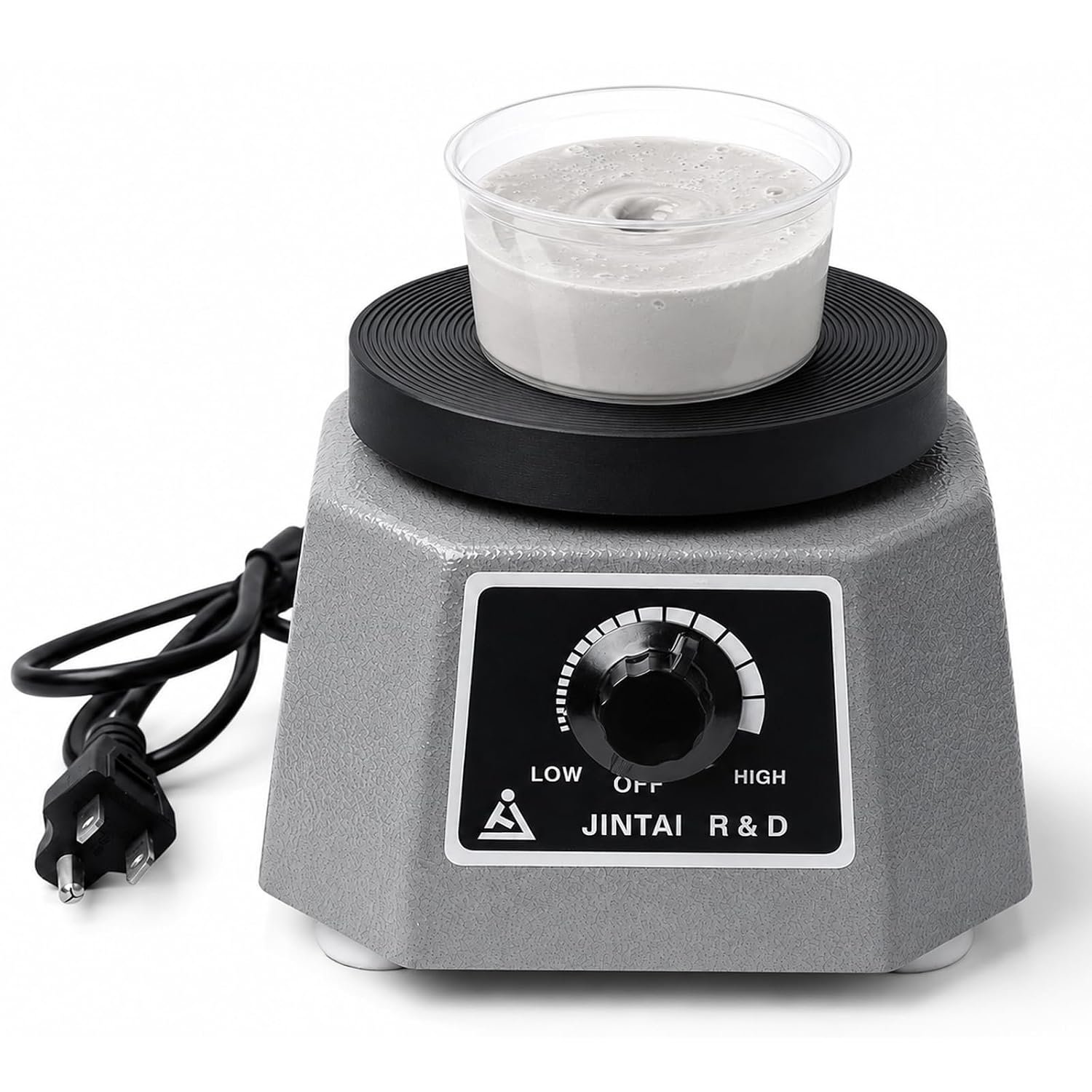
The 4-Inch Lab Vibrator, 100W Oscillator, Knob Speed Control, Efficient Bubble Removal for Plaster, Epoxy Resin, and Gypsum Mixing Machine is a compact tabletop vibrating platform designed to help settle casting materials and release trapped air. The Amazon listing identifies the unit as a round-base laboratory vibrator with a 110V/60Hz electrical specification and 100W power rating. It is intended for applications involving plaster, silicone, gypsum, modified epoxy resin, silica-filled materials, and other compatible casting compounds.
Rather than mixing materials in the conventional sense, a laboratory vibrator works by applying controlled mechanical vibration to a container placed on its platform. The movement encourages bubbles to travel through a viscous material and toward the surface, where they can escape. The process can also help a material settle into a mold or around fine details.
This type of equipment is particularly interesting because vibration intensity matters. Too little vibration may not sufficiently release trapped air, while excessive vibration can potentially cause splashing, separation, movement of a container, or other unwanted effects depending on the material and setup. The product therefore includes a variable-speed control intended to let users adjust the vibration according to the particular application.
The unit is compact enough for tabletop work and is described as having a metal body, a stable base with nonslip rubber feet, ventilation openings for heat dissipation, and a round vibrating platform. The Amazon listing also notes that a spare cushion pad and adjustment tools are included.
This guide explains how a small laboratory vibrator works, where it can be useful, how to approach different casting materials, what to consider before using one, and how this category compares with other approaches to bubble reduction.
Key Features
100W Vibration Motor
The unit is specified with a 100W motor. According to the product information, the motor provides the vibration needed to help release trapped air from plaster, gypsum, epoxy resin, and other casting materials.
Power rating alone does not determine how effective a vibrator will be for every material. The amount of vibration transferred to a container depends on several factors, including the material’s viscosity, container size, container position, fill level, and vibration intensity.
The 100W rating is therefore best understood as an electrical power specification rather than a guarantee that every material will respond identically.
For small laboratory, studio, craft, and model-making applications, controlled vibration can be more useful than simply applying maximum mechanical force.
4-Inch Round Platform
The product is described as a 4-inch lab vibrator with a round vibrating base.
The relatively compact platform makes the unit appropriate for smaller containers and tabletop applications. It is not intended to function like a large industrial vibration table capable of supporting substantial molds or containers.
The platform size should be considered before use. A container needs to sit securely on the available surface without hanging over the edge in a way that could make it unstable during operation.
For small molds, cups, casting containers, and similar laboratory setups, the compact format can be practical.
Adjustable Vibration Control
One of the most useful characteristics of this type of equipment is the ability to control vibration intensity.
The product listing describes a continuously adjustable control knob that allows the user to change the vibration level from lower to higher intensity.
The manufacturer’s instructions specifically advise turning the knob slowly rather than changing the speed abruptly.
This matters because different materials react differently to vibration.
A relatively fluid mixture may respond to gentle vibration, while a thicker compound may require a different setting. A delicate mold or small container may also require a lower intensity than a heavier setup.
Adjustability therefore provides a way to adapt the machine to the task instead of using one fixed vibration level for every application.
Metal Construction
The product information describes a metal body designed for tabletop use.
A metal housing can provide a rigid structure for transferring vibration to the working platform.
The housing also gives the machine a more substantial physical structure than a lightweight plastic-only device might have.
However, construction material alone should not be interpreted as proof of suitability for heavy industrial use. The unit is a compact laboratory-style vibrator, and its appropriate workload depends on the intended application.
Nonslip Rubber Feet
The base incorporates rubber feet intended to help stabilize the machine during operation. The product listing specifically describes these feet as helping reduce unwanted movement.
This is particularly relevant because vibration naturally creates movement.
A machine that vibrates while sitting on a smooth workbench can potentially shift position if the base does not maintain adequate contact with the surface.
Even with rubber feet, the vibrator should be placed on a level, stable work surface.
Ventilation for Heat Dissipation
The product includes built-in ventilation openings intended to help dissipate heat during operation.
Electrical motors can generate heat, particularly when operating for extended periods.
The ventilation openings should therefore remain unobstructed.
The vibrator should not be covered with cloth, paper, plastic, or other materials while operating, and it should not be placed against objects that block the airflow around the housing.
110V/60Hz Electrical Specification
The listed electrical specification is 110V/60Hz, with a 100W power rating.
This is an important compatibility consideration.
Users should verify that the electrical supply available at the intended location corresponds to the machine’s specified requirements. Voltage compatibility is not something to guess based on the appearance of the plug or the fact that the machine is marketed internationally.
Using electrical equipment with an unsuitable power supply can create safety and equipment risks.
Spare Cushion Pad
The product description states that a spare cushion pad is included.
A cushion between the vibrating platform and a container can help provide a more controlled contact surface, depending on the setup.
Consumable or replaceable accessories are useful in work environments where equipment is used regularly, although users should follow the manufacturer’s instructions when replacing or positioning any supplied component.
Adjustment Tools
The product description also indicates that adjustment drivers are included.
These tools are intended to assist with adjustments associated with the equipment.
Any internal electrical adjustment should be approached carefully. Users should not open or modify the machine unless the manufacturer’s instructions specifically authorize the procedure and the person performing it understands the relevant electrical risks.
How a Laboratory Vibrator Helps Remove Air Bubbles
To understand the purpose of the machine, it helps to consider what happens when a viscous material is poured into a mold.
When plaster, resin, silicone, gypsum, or a similar material is mixed, air can become incorporated into the mixture.
Some bubbles remain suspended because the material is thick enough to resist their upward movement.
When the mixture is poured into a mold, those bubbles can become trapped against the mold surface or inside the finished material.
A vibrating platform introduces mechanical movement.
That movement can encourage bubbles to move through the material.
The process can be thought of in simple terms:
Mixing → pouring → vibration → bubble movement → settling → curing
The vibrator does not magically remove all air from every material. Its effectiveness depends on the material’s properties and the way the vibration is applied.
A very viscous compound may behave differently from a thin liquid. A large mold may require a different approach from a small container.
The operator therefore has an important role in choosing the appropriate vibration intensity and duration.
How It Can Be Used
Plaster Models
Plaster is one of the applications specifically identified for this type of vibrator.
When plaster is mixed and poured into a mold, trapped air can create small surface imperfections or voids.
Placing the mold or container on a vibrating platform can help the mixture settle into fine areas and encourage air to rise.
This can be particularly useful when working with molds containing detailed features.
However, vibration should be controlled carefully. Excessive movement can disturb the material or cause it to migrate out of the mold.
Gypsum Applications
Gypsum-based materials can also benefit from controlled vibration during casting.
The machine is described as suitable for gypsum mixing and model-related applications.
When working with gypsum, the timing of vibration can matter.
The material should be handled according to its specific mixing and setting requirements. Vibration is generally part of the pouring and settling process rather than a substitute for correct powder-to-liquid ratios or proper mixing technique.
Epoxy Resin Casting
Epoxy resin is another application identified by the product information.
Resin casting frequently involves concerns about bubbles because air can become trapped during mixing or introduced during pouring.
A vibrating platform can help encourage bubbles toward the surface.
However, epoxy formulations differ considerably. Some are thin and flow easily, while others are highly viscous or specifically formulated for thick pours.
Users should therefore follow the resin manufacturer’s instructions concerning vibration, curing, maximum pour depth, and temperature.
A vibrator should not be assumed to solve problems caused by incorrect mixing ratios or unsuitable curing conditions.
Silicone Casting Materials
The Amazon product description specifically mentions silicone and the reduction of bubbles while pouring silicone materials.
Silicone can be particularly prone to trapping air when mixed, especially in molds with narrow channels or detailed features.
Controlled vibration can encourage bubbles to move upward.
The appropriate vibration level will depend heavily on the silicone formulation and mold design.
Jewelry and Small Casting Projects
The product listing describes applications involving jewelry work and resin casting.
Small jewelry molds often contain fine details that can make trapped bubbles particularly noticeable.
A compact vibrating platform can be useful in this context because the operator can position a small mold or container directly on the working surface.
This may be relevant to makers producing:
- Resin pendants
- Decorative pieces
- Small molds
- Model components
- Casting samples
- Small prototype parts
Laboratory Models
Laboratory and educational environments may use small molds or casting materials for models and demonstrations.
A compact vibrator can provide a controlled mechanical method for settling compatible materials.
The machine’s 4-inch working surface naturally limits the size of the objects that can be placed on it.
Dental or Model-Making Work
Plaster and gypsum model production is another area where controlled vibration can be relevant.
Fine surface details are often important in model-making, and trapped air can create unwanted voids.
The vibrator can be incorporated into the pouring stage to encourage the material to move into detailed areas.
The exact requirements will depend on the material and professional workflow.
Using the Vibrator With Epoxy Resin
Epoxy deserves special attention because resin formulations can vary considerably.
Before using a vibrator, the resin manufacturer’s instructions should be checked.
Some epoxy systems are designed for thin layers, while others are intended for thicker pours. Cure time, viscosity, working temperature, filler content, and pot life can all influence bubble behavior.
A practical workflow can include:
Prepare the Mold
Make sure the mold is clean, dry, and appropriately supported.
Mix the Resin Correctly
Follow the resin manufacturer’s specified ratio and mixing procedure.
Avoid Introducing Unnecessary Air
Aggressive mixing can introduce additional bubbles.
A vibrator is not a replacement for proper mixing technique.
Pour Carefully
A controlled pour can reduce the amount of air introduced into the material.
Place the Container on the Platform
Position the container securely on the vibrating surface.
Begin With Lower Vibration
The product instructions recommend gradual adjustment rather than immediately selecting a high setting.
Observe the Material
Watch how bubbles move and how the material behaves.
Stop When Appropriate
Longer vibration is not automatically better.
The goal is controlled bubble release without disturbing the mold or material.
Using the Vibrator With Plaster and Gypsum
Plaster and gypsum are different from epoxy resin because they begin setting through a chemical reaction after mixing.
That means timing matters.
The material should be mixed according to the manufacturer’s instructions, poured promptly, and vibrated during the appropriate working period.
A reasonable general approach is:
- Prepare the mold.
- Mix the plaster or gypsum according to its instructions.
- Pour the mixture steadily.
- Position the container on the vibrator.
- Begin at a lower vibration level.
- Increase gradually if necessary.
- Observe bubbles and material movement.
- Stop before the material becomes excessively disturbed or begins setting beyond the practical working window.
The exact process varies according to the material.
Who It May Be Suitable For
Laboratory Technicians
A compact laboratory vibrator may be useful for technicians who regularly work with plaster, gypsum, silicone, resin, or similar casting materials.
The adjustable vibration control allows the operator to adapt the intensity to different setups.
Model Makers
People producing physical models may use vibration to reduce visible air pockets and improve the way casting material fills detailed areas.
Resin Hobbyists
Resin casting enthusiasts may use this type of equipment as part of their casting workflow.
It can be particularly relevant for small molds where bubbles are difficult to remove manually.
Jewelry Makers
Small jewelry molds can contain detailed shapes where trapped bubbles become noticeable.
A compact vibrating platform can provide a dedicated workspace for these applications.
DIY Users
DIY users working on plaster, gypsum, or resin projects may find a laboratory vibrator useful when their projects regularly encounter air-bubble problems.
However, occasional hobby users should consider whether the equipment is appropriate for the amount and type of casting they perform.
Small Workshops
A small workshop producing prototypes, molds, models, or decorative castings may benefit from having a dedicated vibration platform.
Its compact dimensions make it more suitable for small-scale work than large industrial molds.
Important Things to Consider
This Is Not a Conventional Mixer
One important distinction is that a vibrating platform is not the same thing as a mechanical mixer.
It does not replace a proper resin mixer, plaster mixer, drill mixer, or laboratory stirrer where thorough material blending is required.
Its primary role is to provide vibration after or during the pouring process to help release trapped air and settle the material.
Users should not confuse vibration with homogenization.
Container Size Matters
The working platform is relatively compact.
A container that extends beyond the usable area can become unstable.
Choose a mold or container that can sit securely on the platform.
Vibration Intensity Matters
More vibration is not necessarily better.
A high setting can cause:
- Material movement
- Splashing
- Mold displacement
- Excessive agitation
- Separation of certain mixtures
- Overflow
The appropriate setting depends on the material and container.
Start conservatively and increase gradually.
Electrical Compatibility
The product is specified for 110V/60Hz operation.
Users should verify the power requirements before connecting the machine.
This is especially important when equipment is used outside the electrical region for which it was designed.
Keep the Work Surface Clean
Casting materials can spill.
Resin, plaster, gypsum, and silicone can harden or adhere to surfaces if allowed to remain.
The product instructions specifically recommend keeping the machine body clean and wiping the surface after use.
Cleaning should be performed with the machine powered off and disconnected when appropriate.
Keep Ventilation Open
The machine uses ventilation openings for heat dissipation.
These openings should remain unobstructed during operation.
Avoid placing the unit against walls or objects that block airflow.
Protect the Electrical Components
Casting materials and electrical equipment should be kept appropriately separated.
Spills should not be allowed to enter vents, switches, electrical connections, or the motor housing.
The vibrator should be used in a clean, controlled workspace.
Working With Different Material Viscosities
One reason variable vibration control is useful is that materials do not all behave the same way.
Low-Viscosity Materials
Thin materials allow bubbles to move more easily.
Excessive vibration may therefore be unnecessary.
Gentler settings may be sufficient.
Medium-Viscosity Materials
Moderately thick materials can benefit from controlled vibration, especially when they contain detailed molds or narrow spaces.
High-Viscosity Materials
Thicker compounds may resist bubble movement.
They may require more deliberate vibration, but increasing intensity does not guarantee better results.
In some cases, proper material preparation, vacuum degassing, pressure casting, or a different process may be more appropriate.
Bubble Removal Versus Vacuum Degassing
A vibrating platform is only one method for reducing bubbles.
Another approach is vacuum degassing.
Vacuum systems reduce atmospheric pressure around a material, allowing dissolved or trapped gases to expand and escape.
This can be useful for certain silicone and resin applications.
However, vacuum equipment is more complex and involves different operating requirements.
Vibration and vacuum degassing are not necessarily competing technologies. In some workflows, they can serve different purposes.
A compact vibrating platform is generally simpler for settling poured materials and helping visible bubbles migrate upward.
Vacuum degassing can be more appropriate when a material requires deeper gas removal before pouring.
The correct method depends on the formulation and project.
Vibration Versus Manual Tapping
Small-scale casting can sometimes be handled by manually tapping or gently moving the mold.
This approach requires little equipment and can work for occasional projects.
However, manual tapping is less controlled and can be tiring when repeated frequently.
A vibrating platform provides a more consistent mechanical movement.
That consistency can be useful for workshops or laboratories where similar casting procedures are repeated.
The choice depends on project frequency, mold size, material properties, and desired process consistency.
Comparison of General Equipment Categories
Small Round Vibrators
Compact round vibrators are designed for relatively small containers and molds.
They can fit on a laboratory or workshop bench and are convenient where working space is limited.
The 4-inch format discussed here falls into this category.
Larger Vibrating Tables
Larger vibrating tables provide a greater working surface and can accommodate larger molds or multiple containers.
They are more appropriate when the workload exceeds the capacity of a small laboratory vibrator.
The tradeoff is increased size and workspace requirements.
Manual Vibration
Manual tapping or shaking requires no dedicated machine.
It can be suitable for occasional projects but provides less consistent control.
Vacuum Chambers
Vacuum chambers are used to reduce pressure around a material and can be effective for degassing certain resins and silicones.
They require additional equipment and appropriate vacuum-rated containers.
Pressure Pots
Pressure casting uses increased pressure to compress or minimize the visible effect of bubbles in certain resin systems.
This is a different process from vibration and requires equipment designed for pressure service.
Mechanical Mixers
Mechanical mixers are designed primarily to blend materials.
They are not substitutes for a dedicated vibration platform when the main objective is settling a poured material and encouraging bubbles to escape.
Practical Tips for Better Results
Prepare the Mold Before Mixing
Have the mold ready before preparing a material with a limited working time.
This reduces delays between mixing and vibration.
Use Appropriate Containers
The container should fit comfortably on the platform.
Avoid unstable containers that could move during operation.
Start Slowly
The product instructions specifically recommend gradual knob adjustment.
Begin with a lower intensity and increase only when necessary.
Watch the Surface
Observe how bubbles move.
If the material begins splashing, climbing the mold walls, or moving excessively, reduce the vibration.
Keep the Machine Level
A stable, level surface helps the vibrator operate more predictably.
Clean After Use
Remove residue before it hardens.
The manufacturer instructions recommend cleaning the machine body and keeping it clean to support its service life.
Disconnect Power After Use
The product instructions specifically state that power should be cut off after use.
This is also a useful general electrical-safety practice.
Common Mistakes to Avoid
Starting at Maximum Vibration
Immediately selecting the strongest setting can disturb the material unnecessarily.
Start gently and adjust.
Using an Oversized Mold
A container that does not sit securely on the platform can become unstable.
Choose a compatible size.
Treating Vibration as a Cure for Poor Mixing
If resin and hardener are not mixed according to the manufacturer’s instructions, vibration cannot correct the underlying problem.
Ignoring Working Time
Casting materials have limited working periods.
Waiting too long before vibration may reduce the usefulness of the process.
Blocking Ventilation
Do not cover the machine or obstruct its vents.
Heat management is part of proper operation.
Allowing Resin or Plaster Into the Housing
A spill can enter openings and potentially damage electrical components.
Protect the machine and clean spills promptly.
Safety Considerations
This machine combines an electric motor with mechanical vibration, so normal workshop safety practices are appropriate.
Keep hands, clothing, and loose objects away from moving components.
Place the vibrator on a stable surface.
Do not operate it where liquids can easily enter the electrical housing.
Do not use damaged power cords or plugs.
Disconnect power before cleaning or performing maintenance.
If the machine produces unusual noise, smoke, burning odor, excessive heat, or abnormal vibration, stop operation and disconnect power.
The machine should also be used in accordance with the voltage and frequency specifications listed by the manufacturer.
When working with epoxy, silicone, plaster, or other chemical materials, follow the material manufacturer’s safety data and recommended protective equipment.
The vibrator itself does not eliminate the need for appropriate ventilation, gloves, eye protection, or respiratory protection when the casting material requires them.
Frequently Asked Questions
What is a laboratory vibrator?
A laboratory vibrator is a tabletop device that applies mechanical vibration to a container or mold. It is commonly used to help release trapped air and settle materials such as plaster, gypsum, silicone, and resin.
What is the power rating of this model?
The product is specified at 100W and uses 110V/60Hz power.
What is the main purpose of the 4-inch lab vibrator?
Its primary purpose is to help reduce trapped air bubbles and settle compatible casting materials. The Amazon description specifically mentions plaster, silicone, epoxy resin, gypsum, and related materials.
Can it be used with epoxy resin?
Yes, epoxy resin is among the materials identified in the product information.
However, epoxy formulations vary, so users should follow the resin manufacturer’s instructions regarding vibration, curing, and handling.
Can it be used with plaster?
Yes. Plaster is one of the primary applications described for the machine.
Can it be used with gypsum?
Yes. The product is described as suitable for gypsum mixing and model-related applications.
Can it be used with silicone?
The product description specifically identifies silicone and silicone-related casting applications.
Does vibration remove every bubble?
No.
Vibration can help encourage trapped bubbles to move through a material, but results depend on viscosity, formulation, container geometry, vibration intensity, timing, and other factors.
Some applications may benefit more from vacuum degassing or pressure casting.
Does this machine mix resin?
Its primary function is vibration rather than conventional mechanical mixing.
It should not be considered a replacement for a dedicated resin mixer.
Does it have adjustable speed?
Yes. The product information describes a variable-speed control knob that allows vibration intensity to be adjusted.
How should the speed knob be adjusted?
The product instructions recommend adjusting the knob slowly rather than making sudden changes.
Starting at a lower intensity and increasing gradually allows the operator to observe how the material responds.
Is the body made of metal?
The Amazon listing describes the unit as having a rugged metal body with a stable base.
Does it have nonslip feet?
Yes. The product information describes rubber feet intended to help stabilize the machine and reduce unwanted movement.
Does it have ventilation?
Yes. The listed design includes built-in ventilation intended to help dissipate heat.
What voltage does it use?
The product description specifies 110V/60Hz.
Users should verify electrical compatibility before operating the machine.
Is it suitable for industrial-scale casting?
The compact 4-inch platform makes it more naturally suited to small laboratory, workshop, studio, model-making, and casting applications.
Large industrial molds may require substantially larger vibration equipment.
Can it be used for jewelry making?
The product information identifies jewelry work among its potential applications.
Its compact format can be useful for small molds and casting projects.
What comes with the machine?
The product description states that a spare cushion pad and adjustment drivers are included.
Package contents can change over time, so the current product listing should be checked for the latest information.
How should the vibrator be cleaned?
The manufacturer’s instructions recommend keeping the machine surface clean and wiping the body after use.
Power should be disconnected before cleaning, and liquids should not be allowed to enter electrical openings.
Can the machine run continuously?
The product information discusses ventilation and use during longer sessions, but users should follow the manufacturer’s operating guidance rather than assuming unlimited continuous operation is appropriate.
Material working time is also a separate consideration.
What should I do if the machine becomes unusually hot?
Stop operation and disconnect power if the machine becomes abnormally hot or shows other signs of malfunction.
Make sure ventilation openings are unobstructed and follow the manufacturer’s maintenance and operating guidance.
Is a vibrating platform better than vacuum degassing?
Neither method is universally better.
Vibration and vacuum degassing work differently. The appropriate option depends on the material, mold, project scale, and desired process.
Is this machine useful for small resin projects?
Its compact platform and adjustable vibration make it relevant to small resin-casting applications.
Users should still match the machine to the container size and resin manufacturer’s recommendations.
Conclusion
The 4-Inch Lab Vibrator, 100W Oscillator with Knob Speed Control is a compact tabletop vibration machine designed around a straightforward purpose: helping trapped air move out of compatible casting materials and encouraging those materials to settle into molds.
Its listed specifications include a 100W motor, 110V/60Hz electrical requirement, 4-inch round platform, adjustable vibration control, metal housing, nonslip rubber feet, ventilation openings, and supplied accessories including a spare cushion pad and adjustment drivers.
The machine can be relevant to a range of small-scale applications, including plaster and gypsum models, silicone molds, epoxy resin casting, jewelry work, model making, and laboratory projects. The product information specifically identifies several of these materials and applications.
Its adjustable vibration is particularly useful because casting materials behave differently. A thin material may require only gentle movement, while a thicker compound may respond differently. Starting at a low setting and gradually increasing the intensity allows the operator to observe the material instead of applying excessive vibration immediately.
At the same time, a laboratory vibrator is not a universal solution for every casting problem. It does not replace correct mixing ratios, proper mold preparation, suitable curing conditions, or specialized processes such as vacuum degassing and pressure casting. The machine is also not a conventional mechanical mixer.
The compact platform means that container size should be considered carefully, while the 110V/60Hz specification makes electrical compatibility another important factor. Ventilation should remain unobstructed, spills should be kept away from the electrical housing, and the machine should be disconnected before cleaning or maintenance.
For makers, laboratory users, model builders, resin casters, jewelry workers, and other small-scale users who regularly deal with air bubbles in suitable casting materials, a controlled vibration platform can become a useful part of the preparation process. Its role is best understood as a specialized tool for controlled settling and bubble reduction rather than a replacement for every other casting technique.
If the specifications and working format match your particular application,
Leave a Reply